

On a typical Monday morning, a mid-size engineering firm can have three different realities running in parallel. In the office, project managers review schedules and RFIs against a stack of printed submittals. On site, a field engineer scrolls through photos on a phone, trying to match them to yesterday’s markups. In a conference room, a client asks whether the latest revision set was issued and which consultants have signed off. The work is technical and precise, but the information flow often remains surprisingly manual.
That friction shows up in small moments first: a drawing set printed too early, a scan saved under an inconsistent file name, a permit document trapped in someone’s email. Over time, those moments compound into measurable costs: rework, delays, missed coordination issues, and avoidable compliance stress. In project environments where timelines are tight and responsibilities are shared across multiple firms, the ability to locate the right document quickly and prove it is the correct version becomes a core operational capability.
Cloud adoption is increasingly the mechanism firms are using to standardize that capability. It supports collaboration across teams, establishes structured access control, and creates traceable records of edits and approvals. Gartner has framed cloud as the “centerpiece of new digital experiences,” reflecting how strongly cloud platforms now shape modern work across industries. For engineering firms, this shift is less about chasing a trend and more about modernizing the “work layer” where drawings, field reports, and compliance documentation actually move.
The cloud transition also fits into a broader story of digital transformation outcomes. McKinsey’s research on transformation performance highlights how leadership, capability building, upgraded tools, and disciplined communication increase the odds of success. Engineering firms that approach cloud as an operating model change (rather than a simple file migration) tend to capture value faster and avoid common adoption pitfalls.
What follows is a practical look at how mid-size engineering firms are moving from paper to cloud; why the change is accelerating; and what “good” looks like when cloud becomes a foundation for project delivery, governance, and resilience.
The Quiet Operational Tax of Paper-Based Workflows
Paper creates confidence at the moment it is printed. A drawing set in hand feels definitive, especially for teams trained to think in plans, sections, and details. The problem begins the moment that paper becomes stale. Engineering projects evolve constantly due to client feedback, site conditions, value engineering, permit comments, or procurement constraints. Paper cannot keep pace with that rhythm without turning into an expensive, error-prone replication machine.
In many mid-size firms, paper-heavy operations coexist with shared drives and email distribution. That hybrid is where risk multiplies. Teams can “work hard” yet still lose time to searching, validating, and reconciling documents. When a project turns stressful, the system often reverts to screenshots, PDFs, printouts, and ad hoc sharing. The workflow becomes dependent on individuals who know where things are stored, which is exactly the opposite of what a firm needs as it scales.
A cloud-based document environment addresses this by making version control and retrieval part of the infrastructure. Instead of relying on memory and informal habits, the firm relies on structured storage, searchability, permissions, and audit logs. These controls are operational in nature: they reduce coordination errors and shorten the cycle time between “issue” and “execution.”
Collaboration Becomes a Measurable Delivery Advantage
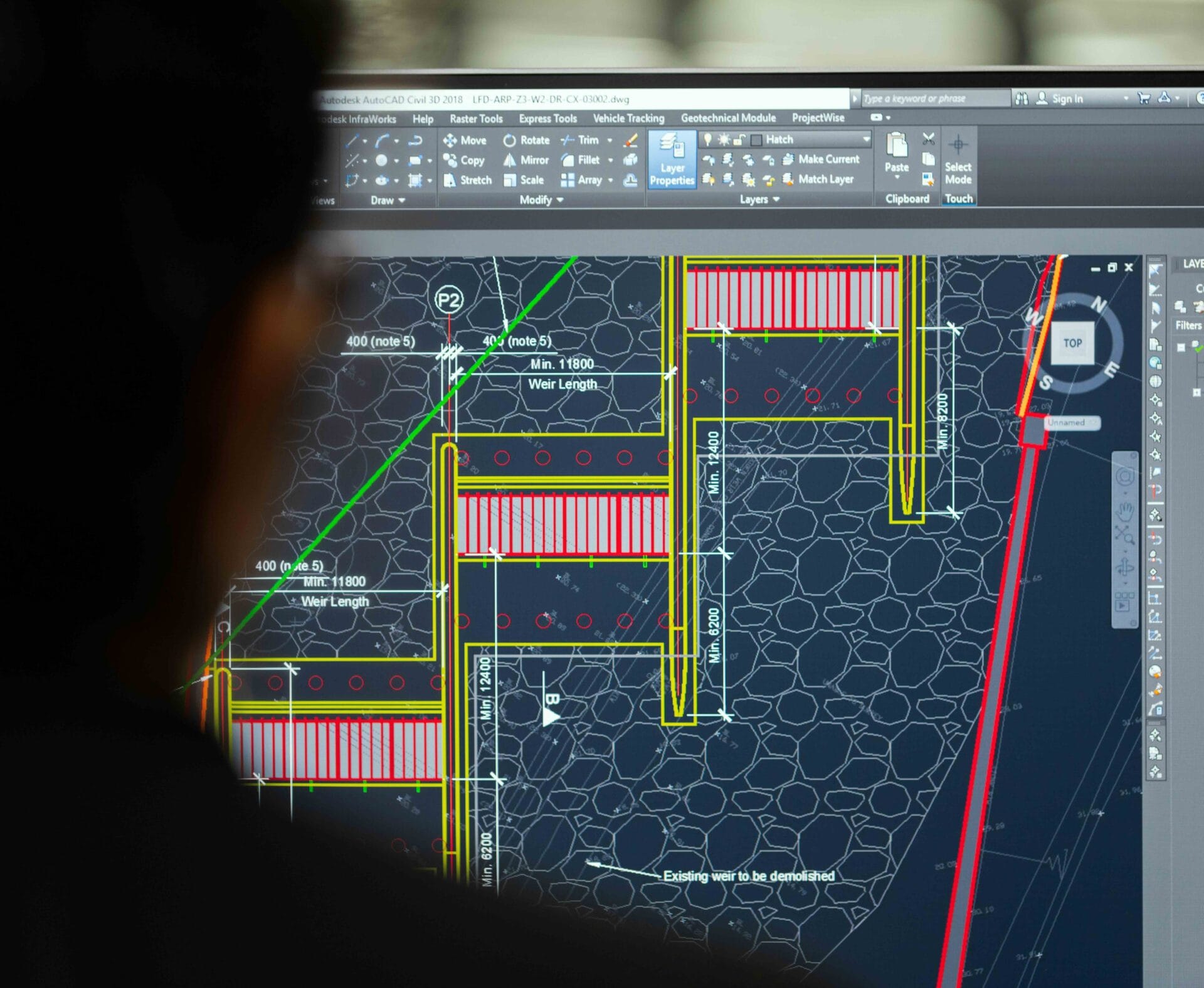
Engineering delivery is collaborative by design. Even a single-building project can require structural, MEP, civil, geotechnical, surveying, and specialty consultants. Add contractors, owners, and authorities having jurisdiction, and the document surface area expands rapidly. Cloud platforms can act as the shared operating layer for these interactions, provided they are implemented with clear governance.
Harvard Business Review’s coverage of cloud has emphasized that cloud computing reshapes how work is coordinated, enabling faster iteration and tighter connection between technology and business operations. In engineering firms, that shift shows up as fewer delays waiting on files, fewer “wrong version” incidents, and more consistent handoffs between office teams and the field.
This is also where adoption moves beyond storage and becomes process. Submittals can be routed digitally, approvals recorded, and responsibility clarified. Field reports can be uploaded into standardized templates that remain tied to the project record. When disputes arise (about scope, changes, or timing) the firm has a stronger evidentiary trail. That trail is not a bureaucratic add-on; it is part of delivering projects with predictability.
Compliance & Governance Move from Effort to System Design
Engineering firms operate under client requirements, contractual obligations, and regulatory constraints. Documentation retention, access control, and traceability are not optional in many project contexts. Paper-based systems can meet those needs, but they do so through manual labor—copying, scanning, filing, and chasing down signatures. Cloud environments shift the burden from repeated effort to system design.
This is especially relevant as cybersecurity becomes inseparable from operational risk. Engineering firms hold valuable project data: infrastructure layouts, proprietary designs, client information, and sensitive site details. Protecting those assets requires disciplined access control and modern security practices.
NIST’s Small Business Cybersecurity Corner is a practical, authoritative starting point for SMBs looking to implement structured cybersecurity guidance. When cloud adoption is paired with multi-factor authentication, endpoint management, role-based access, and monitoring, firms reduce exposure from lost devices, shared passwords, and uncontrolled file sharing. The strongest results come when security is embedded into everyday workflow rather than added as a separate initiative.

Cost Structure & Scalability Stop Being a Guessing Game
Many engineering firms reach a point where on-premise storage and “server room economics” become unpredictable. Hardware refresh cycles, storage expansion, backup failures, and downtime events produce costs that are difficult to forecast and hard to justify to leadership when compared to billable delivery priorities.
Cloud platforms offer more transparent cost structures, as well as elasticity that aligns with engineering demand patterns. Firms can scale storage and computing needs based on the project portfolio and reduce infrastructure overhead that does not directly improve project outcomes. McKinsey’s cloud research connects value capture to disciplined use cases and cost-optimization levers, reinforcing that cloud strategy needs operational intent rather than generic adoption.
Gartner’s positioning of cloud as a business necessity also reflects how strongly competitiveness is now tied to cloud-enabled operating models. For mid-size engineering firms, that necessity tends to show up in growth moments: a new office location, a larger client with stricter security expectations, or multi-state coordination that strains legacy systems.
Business Continuity Becomes Part of Delivery Credibility
Engineering firms sell reliability. Clients expect that drawings, calculations, and compliance records remain accessible and intact over long project durations. When operations depend on local servers, informal backup routines, or paper archives, continuity becomes a vulnerability. Weather events, local power outages, ransomware, and simple human error can interrupt delivery.
The SBA provides practical guidance on business continuity planning for small and mid-sized organizations, reinforcing that disruptions are common and planning reduces operational damage. Cloud environments strengthen continuity by enabling off-site access, automated backups, and faster recovery pathways, especially when configured with clear retention policies and tested restore procedures.
Resilience is not only a defensive posture; it is part of client trust. Firms that can continue operations during disruptions protect deadlines and preserve confidence during high-pressure project phases.
Adoption Succeeds When the Firm Treats Cloud as an Operating Model Shift
Cloud projects often fail quietly. The technology goes live, but teams keep exporting, printing, emailing, and storing duplicates because habits were never redesigned. The firm ends up paying for cloud while still operating like a paper-based organization.
Successful engineering firms approach cloud adoption in phases that match delivery realities. They standardize file structures, naming, and access roles. They migrate active projects with governance, not just data. They train teams through real project scenarios rather than generic tutorials. They set expectations with external partners about where the “source of truth” lives. Over time, that discipline becomes institutional capability.
Forbes has written about cloud culture as a shift from control-oriented IT to collaboration-oriented IT, which maps closely to what engineering firms need when projects are shared and fast-moving. Engineering leaders who frame cloud as a delivery advantage (not an IT upgrade) tend to achieve faster adoption and clearer ROI.
The Firms that Modernize Information Flow Modernize Delivery
Paper will remain part of engineering culture, especially in the field. The direction of travel is still clear: project delivery is becoming more data-driven, more distributed, and more dependent on fast, traceable collaboration. Mid-size engineering firms that build cloud-based operating foundations gain tighter control over versions, faster coordination, stronger governance, and better continuity under pressure. Those advantages translate directly into fewer delays, cleaner handoffs, and more confident client relationships.
If your engineering firm is ready to modernize documentation, collaboration, and security in a way that supports growth, our team can help you design and implement a cloud foundation built for real project workflows, complete with governance, cybersecurity controls, and ongoing operational support.
👉 If your organization is ready to modernize how projects run from kickoff to closeout, contact our team today to turn cloud into a practical, secure delivery advantage.
